Friday, October 17, 2014


Monday, September 29, 2014

Saturday, July 5, 2014
Summer Wind

Female hummingbird feeding her young one day before it fledged or left the nest. After each feeding the nestling hopped onto the rim of the lichen covered nest and began to practice flying by revving its wings while remaining on the nest.

Friday, May 23, 2014
Monday, May 19, 2014

Sunday, May 11, 2014
Cuckoo Food
The eastern tent caterpillar (Malacosoma americanum) works in massive family groups of up to 300 siblings to form thier large protective silken tents. 

The caterpillars are the larval stage of a snout moth which is strickly nocturnal. The adult moths lay their egg masses on Prunus trees. The newly hatched larvae work together to construct their tent. They emerge from their silk barrier three times a day to feed on the cyanide rich Prunus leaves. The cyanide is imparted to the caterpillars making them unpalatable to nearly all would be predators. However, cuckoos are know to slurp down the hairy cyanide ridden larvae. This sparks my curiosity as to how the cuckoos are able to metabolize the enzyme inhibitor while most other can't.
On another note, a prairie warbler was seen twirling up a nice portion of the tent around its bill, presumably to use for nest building.
Gros Oaks
May is a phenomenal month. The Wind blows from the SW and the Sun is now well north of the Equator. The increasingly direct insolation primes the area for flowers, insects, and birds galore. Most sources indicate that oak trees are Wind pollinated (anemophilous), but below is some evidence that shows other modes of pollination are also in use.


Monday, April 14, 2014
Maine-iac
The coast is the edge of the world. The Maine coast is the edge of a wild world. There are many inhabitants of the coast, but in the winter there is a single coast master that keeps things wild.


 Those fanned retraces are the source of the winnowing noise that is produced during courtships displays.
Over the winter an exceptional number of snowy owls irrupted to the south of their Arctic breeding grounds. Scientists are still learning lots about these raptors. There is now evidence indicating that these large owls hunt over the open ocean at night. They use ice packs up north and their wings down south to get out to rafts of sea ducks.
Their feathers are thicker and heavier than most, which account for them being the heaviest owl in North America. Plus, they have feathers up and down their zygodactal feet to help keep their warm blood separated from the energy stealing snow that they often stand on.
The above coast master was working the marsh adjacent to some ocean swells where there were plenty of scoters available for night plucking.
Another nice site was a wisp of Wilson's snipe.
Friday, February 21, 2014
Superspecies in Babylon

Common teal, eurasian teal, teal, singing teal...people love naming things and it takes plenty of effort to get everyone to agree on a name. Even when a name is agreed on, the scientific classification may remain disputed and murky, as in the case of the green-winged, common, and speckled teal clade. Above is a picture of two "species" within the super-species trio, green-winged teal and a surprise Eurasian teal. The story gets even more complicated as Speckled teal has been split into two separate species.
Check out this link to the American Ornithological Union, which has a committee dedicated to examining and deciding upon avian taxonomy and phylogenetics. The fact that it can be so difficult to define species sheds light on the perpetual march of life and that our naming and classification systems are excellent tools to aid in biological understanding, but they are not perfect tools.
And lastly, how are super-species different than subspecies? Well it has to do with vicariance and a few votes from a taxonomic committee.


Wednesday, November 20, 2013
A Freedom Bird Blows In
Thanksgiving is upon us and being a clique American I will be eating a turkey. However I will not be eating a butterball or the like because I don't agree with their methods. I refuse to give my money to support giant turkey factories. The people running these "farms" are concerned with one thing...money....cash is their God. These turkeys have no life force, they were not raised in a turkeyish fashion. I barely consider them turkeys. They are also laden with antibiotics. Antibiotics in food is a complex issue, but one of the main drawbacks it that the overuse and transfer of the antibiotics assist in the establishment of bacteria that is resistant to the antibiotics. This renders the antibiotics useless and promotes superbugs.
Wild turkeys are great creatures; Benjamin Franklin wanted the wild turkey to be the national symbol over the bald eagle on the account that the eagles are kleptoparasites and turkeys are strutters. Perhaps Ben liked that the males are polygamous or that they are bold enough to defend their territory.
Wild turkeys are great creatures; Benjamin Franklin wanted the wild turkey to be the national symbol over the bald eagle on the account that the eagles are kleptoparasites and turkeys are strutters. Perhaps Ben liked that the males are polygamous or that they are bold enough to defend their territory.
Now, a bird that lived a more natural life on a small family owned farm sounds like it would be much more tasty and bursting with beneficial life force. Last year I roasted a fresh turkey from Raleigh's Poultry Farm in Kings Park, NY. This was without any doubt the most flavorful and satisfying turkey I have ever had...and I have had some amazing fried turkey in the past. The fresh hen from Raleigh's was never frozen and was allowed to live and breath in a much better environment than the cavernous turkey factory warehouses. I will be getting another local bird this year.
Wednesday, November 13, 2013
Ambrosia and your Shnoz
Late summer and fall are prime time for allergies for many people. About 30% of Americans experience hay fever, aka allergic rhinitis. Allergic rhinitis is a medical term that describes nasal inflammation that is typically caused by pollen from the plants of the Ambrosia genus. This is the ragweed family, a taxa of monoecious shrubs or herbs that are particularly abundant in the Northeast portion of the USA. The plants are Wind pollinated, which scientist call anemophilous. A single plant contains billions of grain of pollen, which can travel several hundred miles in the Wind. When the pollen is ingested, via the nose or mouth, the immune system mounts an attack on the allergen as if it was a potent threat. The body reacts to the pollen's protein by creating antibodies and histamine. The histamine is synthesized in mast cells which are concentrated in the nasal cavity and other areas that are prone to infiltration by pathogens. Histomine functions to open selective permeability in membrane for white blood cells. The histomine is also the cause for the allergy symptoms..sneezing, coughing, red eyes, runny nose....all the good stuff.
The two main culprits for of the pollen are common ragweed and great ragweed.
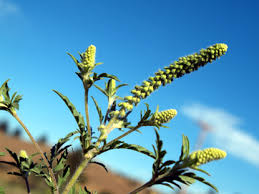

The two main culprits for of the pollen are common ragweed and great ragweed.
common ragweed inflorescence
great ragweed inflorescence
Wednesday, October 23, 2013
Ebird, Citizen Science, and the Wind
The gadget at the right hand part of this blog webpage is called BirdTrax. It is a great way to incorporate real-time citizen science data into my blog. I set up the BirdTrax gadget with customized parameters, as instructed on their website, to display bird sightings from my immediate area (Long Island, NY, USA).
The bird sightings that are displayed are taken from ebird and BirdTrax lets me know when rare or otherwise interesting birds are seen in my area. ebird is a progressive concept that allows anybody, mostly enthusiastic bird watchers, to submit observations of birds utilizing a standardized system of effort, gps location, and quality control. ebird allows bird watchers to record all of their sightings, thus keeping a running list of all the species seen and the different areas visited. The overall package is an enticing way to contribute to ongoing ornithology. The data can be accessed, after a permission request, to perform academic studies or otherwise examine bird phenomenons. Over 100,000 user have generated over a million lists or data sets creating ample opportunity to conduct research.
Oh, and of course birds rely on the wind...especially the migrating species. There are several types of migration strategies in North America: neo-tropical, short distance, residents, and dispersers. Do some research if you are curious...it can be complicated even within the same species of bird.
The bird sightings that are displayed are taken from ebird and BirdTrax lets me know when rare or otherwise interesting birds are seen in my area. ebird is a progressive concept that allows anybody, mostly enthusiastic bird watchers, to submit observations of birds utilizing a standardized system of effort, gps location, and quality control. ebird allows bird watchers to record all of their sightings, thus keeping a running list of all the species seen and the different areas visited. The overall package is an enticing way to contribute to ongoing ornithology. The data can be accessed, after a permission request, to perform academic studies or otherwise examine bird phenomenons. Over 100,000 user have generated over a million lists or data sets creating ample opportunity to conduct research.
Oh, and of course birds rely on the wind...especially the migrating species. There are several types of migration strategies in North America: neo-tropical, short distance, residents, and dispersers. Do some research if you are curious...it can be complicated even within the same species of bird.
Wednesday, October 16, 2013
Wind then Waves
Wind always comes before waves. Wind creates waves. Surfline has a great explanation of how waves are created. The actual physical movement that water molecules experience in an ocean wave may surprise you. Check out this animation; water waves are a combination of longitudinal and transverse waves. Each water molecule does not move very far...possibly a few inches at most. Can anybody do some research to see if scientists have studied the actual distance a single water molecule moves in an average size ocean wave.
The Wind was roaring from the east this past week, October 10-13, and some nice swells formed due to the friction of wind and water. Here is some footage I took of waves breaking at a great spot on the barrier islands of Long Island. It is phone video footage...so not great resolution, but the waves are 5-7 ft high on the faces. The buoy was reading over 9 ft at a 10 second period, which is a nice ripe swell for Long Island. On the third and last wave, a surfer gets a nice barrel ride.
This wave is great for surfing, it starts as a surging wave off a point of land and tapers off into a spilling wave as it wraps along the shoreline. I got a ride that was at least 200 yards long, easily the longest wave I've ridden on Long Island in the decade plus that I've been surfing. Some scientists categorize breaking waves into three types: surging, dumping, and spilling. What do you think these terms mean...?
Lastly...buoys are awesome. They are the robotic sentinels of the ocean. The NOAA buoy system provides a wealth of information which can me used for so many different functions. Do you use the buoys for anything or can you imagine who would and why... Click on a yellow diamond, which represents a buoy location, and see what data it is collecting.
The Wind was roaring from the east this past week, October 10-13, and some nice swells formed due to the friction of wind and water. Here is some footage I took of waves breaking at a great spot on the barrier islands of Long Island. It is phone video footage...so not great resolution, but the waves are 5-7 ft high on the faces. The buoy was reading over 9 ft at a 10 second period, which is a nice ripe swell for Long Island. On the third and last wave, a surfer gets a nice barrel ride.
This wave is great for surfing, it starts as a surging wave off a point of land and tapers off into a spilling wave as it wraps along the shoreline. I got a ride that was at least 200 yards long, easily the longest wave I've ridden on Long Island in the decade plus that I've been surfing. Some scientists categorize breaking waves into three types: surging, dumping, and spilling. What do you think these terms mean...?
Lastly...buoys are awesome. They are the robotic sentinels of the ocean. The NOAA buoy system provides a wealth of information which can me used for so many different functions. Do you use the buoys for anything or can you imagine who would and why... Click on a yellow diamond, which represents a buoy location, and see what data it is collecting.
Monday, September 30, 2013
The Bass are Beconing
The Wind was calm with some soft puffs from the north while I was fishing on the beach a few nights back. A subtle glow from the milky way helped to shimmer some light while retrieving my lure. I was having a vision of a striped beauty snagging my lure when....BAM! and yank. It was the second striped bass of the night and they both took the black teaser. The second was a legal keeper so I sauteed it with white wine and tomatoes. I say "it" because it was not a particularly large or girthy fish. It was about 10 lbs and 30 inches long. At that size it could be either a male or female, but if it is over 25 lbs or 35 inches long is a female according to some sampling conducted in the 1950's.


Here is a good overview of bass migration and biology, although there is some debate about some different migratory patterns of the Hudson River population.
Many say that an east Wind is the best time to fish for the stripers, possibly because it blows plankton to our shores and the bait fish pile up on it. Living up to its reputation of being piscivorous, only fish were found in its belly (pictured above). I sliced open its stomach and found what I believe to be Altantic silverside...or after some consultation with my bass brained cousin, possibly sand lances, aka sand eels. Funny, the lure I happened to be using mimics these fish...
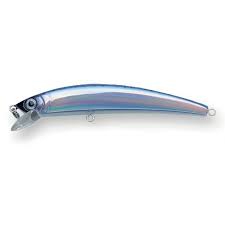
Does anybody know if bass can see colors in the same manner that we do? Or how deep light penetrates the water column to allow the colors to be seen with much difference other than shades?


Here is a good overview of bass migration and biology, although there is some debate about some different migratory patterns of the Hudson River population.
Many say that an east Wind is the best time to fish for the stripers, possibly because it blows plankton to our shores and the bait fish pile up on it. Living up to its reputation of being piscivorous, only fish were found in its belly (pictured above). I sliced open its stomach and found what I believe to be Altantic silverside...or after some consultation with my bass brained cousin, possibly sand lances, aka sand eels. Funny, the lure I happened to be using mimics these fish...
Does anybody know if bass can see colors in the same manner that we do? Or how deep light penetrates the water column to allow the colors to be seen with much difference other than shades?
Sunday, September 29, 2013
Bird Time
I love watching birds. They are colorful and dynamic, meaning they are purrty and constantly changing. They change colors over the course of the year by molting their feathers, the species that are seen in a particular region change over the course of the year due to migration, and the species that are seen change depending upon what type of habitat you are in. Like I said, I love watching birds...I like to observe them feeding, fighting, nest building, and flying. There are very few dull moments when out on the prowl spying on birds. Optics are optimal for full viewing pleasure, as binoculars or spotting scopes truly enhance the viewing experience. They are not necessary though; as listening to bird song, counting large migratory movements, or an occasional up close and personal interaction do not require optics.
September and May are particularly fantastic months to bird watch on Long Island and elswhere in the Northeast. During September neotropical migrants make their mind blowing voyages from their breeding territories in North America down to Mesoamerica, South America and the Caribbean. Thus many species that do not call Long Island home during the summer breeding season can be seen during September as they pass through on their way south or in May as they pass through on their way north. This highly coordinated movement is highly dependent upon the Wind. The birds pray to the Wind gods, especially Boreas during September. Boreas gives the migrants a favorable flow to engage on their journey. In fact the majority of migrants wait for north Winds to blow before they ascend into the air column to move dozens, or hundreds, or thousands of miles to wintering grounds.
This dependency on the Wind can be observed very easily, if one's timing is well planned. It is not that hard, just wait unit the Wind pushes from a northerly direction during September; particularly if it blows northwest overnight. Get out into some good habitat early the next morning, and there will likely be a noticeable increase in the abundance and diversity of birds life. An emerging tool for monitoring these massive movement is through the utilization of NEXRAD Doppler weather radar. The radars, which are the same units used by NWS and other meteorologists, can detect birds, bats, and insects while they operate in clear air mode. I think clear air mode is the default mode of operation when significant water laden air masses are not present. NJ Audubon does a great job of explaining the entire process for using radar to monitor bird migration. Essentially, many birds are nocturnal migrants, they take to the skies at dusk, and the radars can detect the density, velocity, and direction of birds much as the radars do for nimbus clouds. Birds show up as more pixelated representations on the radar image, denoting many separate individuals as opposed to the more nebulous and contiguous images that result from the relatively larger rain clouds.
Check out the radar time loop I recorded from the Upton, Ny radar a few nights ago when the Wind was blowing from the north. Sunset was a little before 7pm and the loop is playing from 6:30ish to 8:00ish. You can see that small pixelated images emerge on the display just after sunset. These areas of blue and green represent birds taking to the sky. They seem to be concentrated over over the Bridgeport area; maybe the migrants piled up as they hit the LI Sound after following the Housatonic River as a flyway. Maybe a reader can speculate why they are congregating at Bridgeport on this particular evening.
 Here is an image from later that same night. Lots of birds up and moving.....which way are they headed???
 Looks like they are moving from northeast to the southwest, as would be excepted given the north Wind and the desire to stay over land, which runs generally from NE to SW in this area. The red signifies birds moving away from the radar and the green shows movement towards the radar.

The whole NE is lit up with sweet bird action given the favorable Winds and the time of year, September. The next morning I went out and enjoyed a great day of bird watching. Here are some possible questions to start up some blog conversation.
How high do you think birds fly during migration? How do we know theses are birds shown on the radar and not something else, like insects? Who first though of using radar in this manner? Please join in.
September and May are particularly fantastic months to bird watch on Long Island and elswhere in the Northeast. During September neotropical migrants make their mind blowing voyages from their breeding territories in North America down to Mesoamerica, South America and the Caribbean. Thus many species that do not call Long Island home during the summer breeding season can be seen during September as they pass through on their way south or in May as they pass through on their way north. This highly coordinated movement is highly dependent upon the Wind. The birds pray to the Wind gods, especially Boreas during September. Boreas gives the migrants a favorable flow to engage on their journey. In fact the majority of migrants wait for north Winds to blow before they ascend into the air column to move dozens, or hundreds, or thousands of miles to wintering grounds.
This dependency on the Wind can be observed very easily, if one's timing is well planned. It is not that hard, just wait unit the Wind pushes from a northerly direction during September; particularly if it blows northwest overnight. Get out into some good habitat early the next morning, and there will likely be a noticeable increase in the abundance and diversity of birds life. An emerging tool for monitoring these massive movement is through the utilization of NEXRAD Doppler weather radar. The radars, which are the same units used by NWS and other meteorologists, can detect birds, bats, and insects while they operate in clear air mode. I think clear air mode is the default mode of operation when significant water laden air masses are not present. NJ Audubon does a great job of explaining the entire process for using radar to monitor bird migration. Essentially, many birds are nocturnal migrants, they take to the skies at dusk, and the radars can detect the density, velocity, and direction of birds much as the radars do for nimbus clouds. Birds show up as more pixelated representations on the radar image, denoting many separate individuals as opposed to the more nebulous and contiguous images that result from the relatively larger rain clouds.


The whole NE is lit up with sweet bird action given the favorable Winds and the time of year, September. The next morning I went out and enjoyed a great day of bird watching. Here are some possible questions to start up some blog conversation.
How high do you think birds fly during migration? How do we know theses are birds shown on the radar and not something else, like insects? Who first though of using radar in this manner? Please join in.
Wednesday, September 25, 2013
About Wind Blown Freedom
The Wind Giveth and the Wind taketh away. This website serves to promote scientific knowledge and will go wherever the Wind blows it. The Wind is an immensely powerful phenomenon and affects many aspects of life on earth. The Wind demands respect and should be capitalized when written. On this site I plan on sharing my passion of outdoor freedom and seeing if I can connect my passions to the wind somehow. Let's explore how far we can take the Wind's relationship to earthlings. Please participate and share unique ways in which the Wind affects you or things you enjoy. There is no limit to the degrees of interconnection between the Wind and... anything. Don't forget to pray to the Wind gods.


Subscribe to:
Posts (Atom)